
Tango Kilo Mike
Charitable Trust
Exploring career options: Your guide to making the leap
Changing careers is a significant decision that many people contemplate at some point in their professional lives. Whether it's due to a desire for advancement, job satisfaction, work-life balance, or personal growth, understanding the different career paths available and considering the key factors before making the switch is essential. In this article, we'll explore various career options and delve into the motivations behind career changes, along with important considerations to keep in mind.
Motivations for changing careers
Changing careers is a substantial decision that requires careful consideration of various factors. It is critical to examine your motivations and have good understanding of the wide array of choices available. It is equally important in evaluating your financial needs, skills, the market demand of whatever it is you’re considering, other personal and familial factors, and more, to ensure a successful transition that aligns with your goals and aspirations.
Let’s delve a little deeper in to why people decide to change careers.
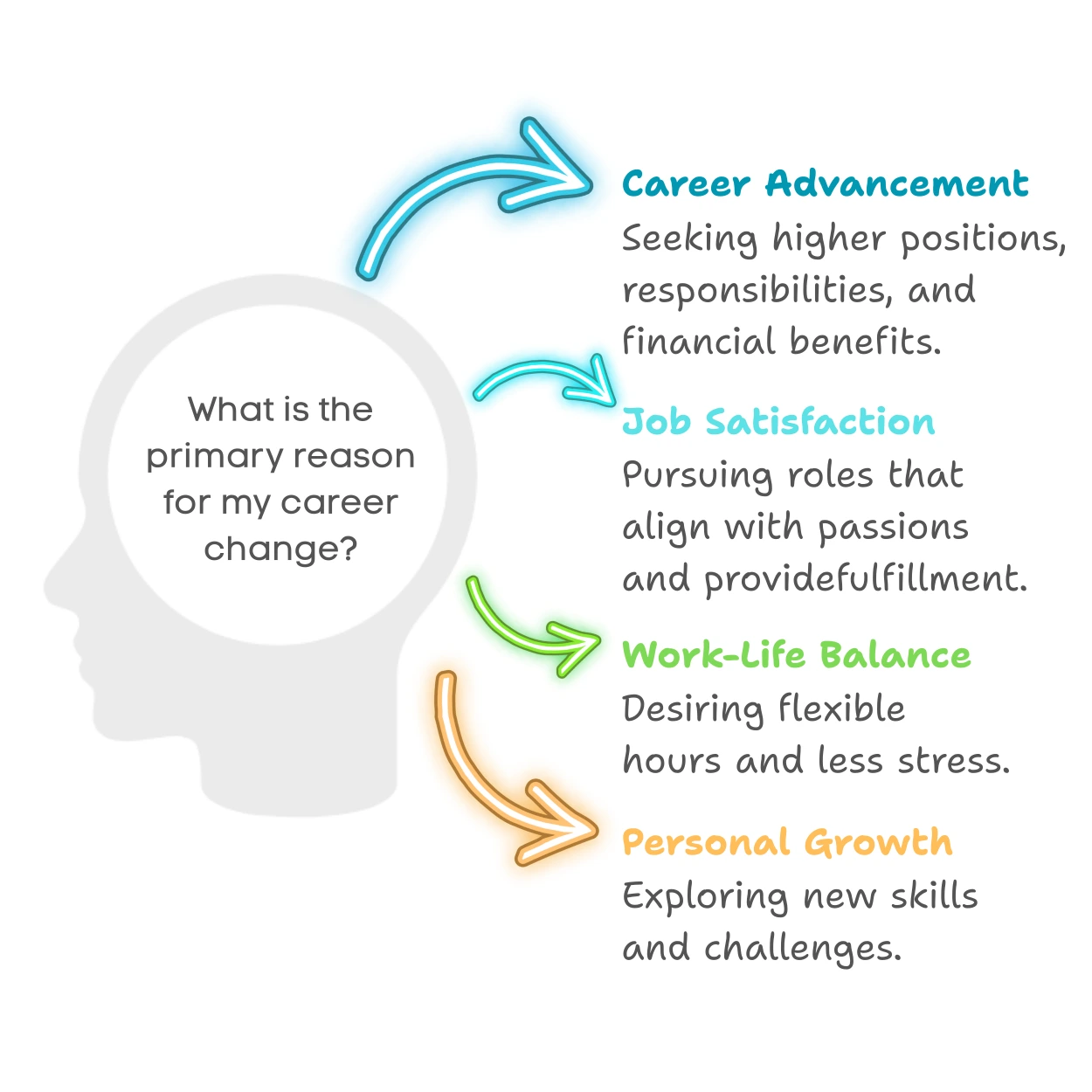
Career advancement
Many individuals seek career advancements for higher positions or greater responsibilities, often accompanied by better salary and benefits. Moving up the corporate ladder can provide a sense of accomplishment and financial security.
Job satisfaction
Job satisfaction is another common reason for career changes. Lack of fulfilment in the current role may lead individuals to seek out positions that align better with their passions and purpose, fostering a more meaningful professional life.
Work-life balance
Achieving a better work-life balance is a top priority for many. The desire for more flexible working hours or a less stressful environment encourages people to explore career options that allow them to better manage their personal and professional lives.
Personal growth
Personal growth and development often inspire career changes. Learning new skills, taking on new challenges, and seeking continuous improvement can drive individuals to explore new fields or industries.
Looking at your career options
Even if you’ve weighed the options, formulated a plan, you may be inadvertently pigeon-holing yourself to something below what you’re actually capable of. Here are some different options that you could consider as your next move.

Corporate jobs
Corporate jobs offer a structured environment with clear career progression pathways and opportunities for professional development. Popular corporate roles include marketing, finance, human resources, and IT. Working in a corporate setting often comes with benefits such as health insurance, retirement plans, and paid time off.
Trades
Trade professions, such as electricians, plumbers, and carpenters, offer stability and high demand. Trade jobs often require specific training and certification but can lead to rewarding careers with good earning potential and job security. It is likely the one option that will require formalised training and certification as the immediate barrier to entry.
Self-employment
Self-employment provides the freedom to be your own boss. This path can include freelancing, consulting, or starting a small business. While self-employment offers flexibility and control over one's work, it also comes with challenges, such as income stability and the need for continuous client acquisition.
Entrepreneurial ventures
Entrepreneurial ventures involve starting and running your own business, with the potential to build and eventually sell the company. Entrepreneurs must be willing to take risks, being adaptable and resilient. Tips for success include thorough market research, developing a solid business plan, and building a strong team. It is the high-risk, high-reward option.
Freelancing
Freelancing allows for project-based or part-time work without long-term commitments to any single employer. Freelancers have the flexibility to choose their clients and projects and can often work from anywhere. However, income stability can be uncertain, and freelancers must continuously seek new clients.
Consulting
Consulting involves providing expert advice in a specific field to organisations. It offers high earning potential and the ability to leverage existing expertise. However, consulting requires a strong professional network and can involve significant travel.
Remote work
Remote work opportunities have increased significantly in recent years. This option allows individuals to work full-time from a remote location, offering flexibility and eliminating the need for commuting. Remote work requires self-discipline and can lead to isolation but offers broader job opportunities.
Gig economy jobs
Gig economy jobs, such as those found on platforms like Uber and Fiverr, offer short-term or project-based work. This path provides flexibility and diverse work experiences but generally lacks benefits, with potential income volatility.
Non-profit and volunteer work
Working with non-profit organisations allows individuals to support meaningful causes. Non-profit work can be emotionally fulfilling and make a positive impact, although it often comes with lower pay and can be emotionally demanding.
Considerations before switching careers
Working with non-profit organisations allows individuals to support meaningful causes. Non-profit work can be emotionally fulfilling and make a positive impact, although it often comes with lower pay and can be emotionally demanding.
Non-profit and volunteer work
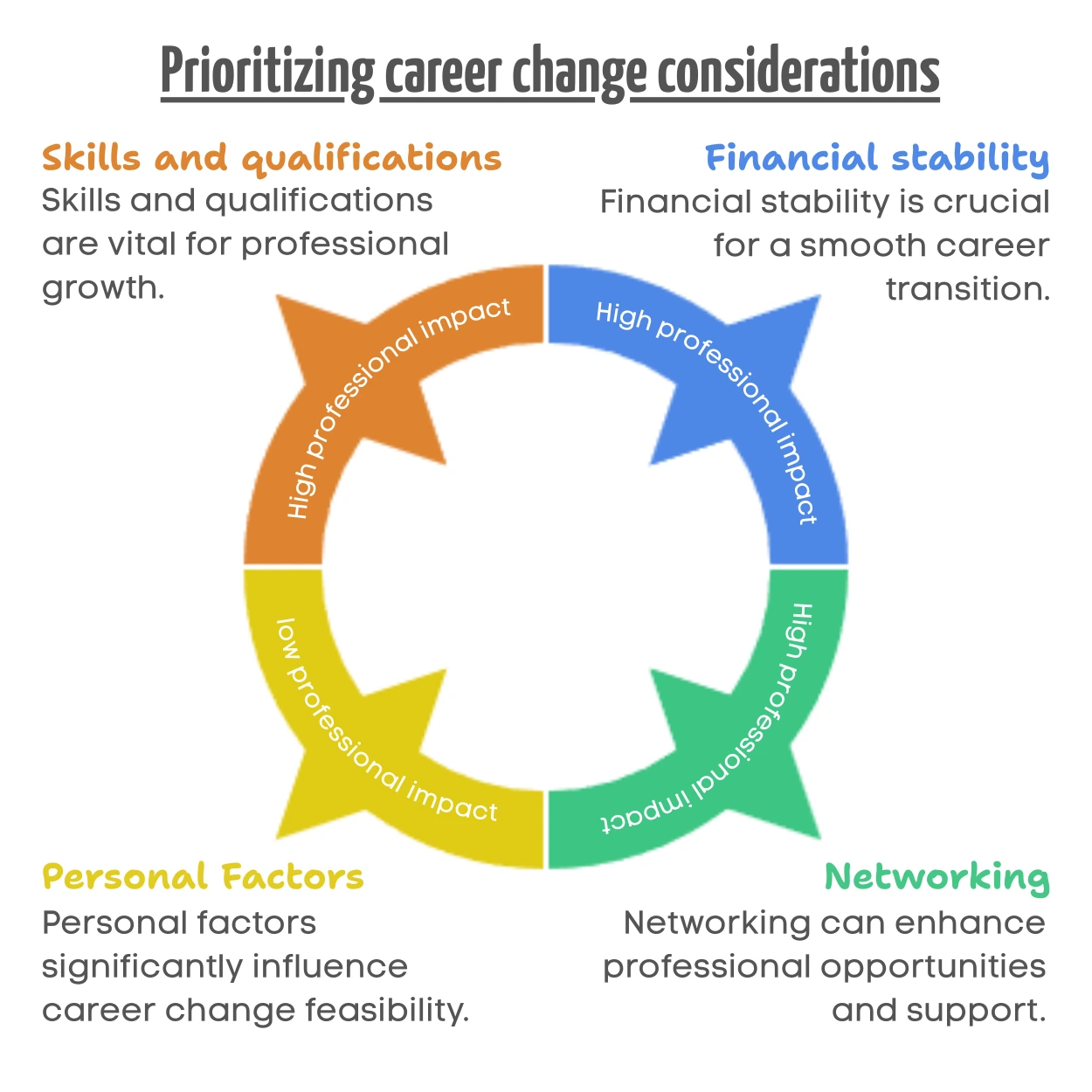
With more understanding for motivation, the type of move you want to make, there are still further considerations required. How will you fund the transition, and maintain your financial commitments elsewhere whilst gearing up? Do you need to learn new skills to be successful? Have you had an honest dialogue with yourself as to your capability to be successful? Do you know people who can help? The list goes on. Here are some considerations we’d make:
Financial stability
Before making a career switch, it's crucial to assess the financial implications. Having a safety net in place can provide peace of mind during the transition period.
Skills and qualifications
Analysing transferable skills and identifying any additional qualifications or training needed is essential. Continuously improving and investing in professional development can help ease the transition into a new career.
Market demand
Researching job market trends and understanding the demand for specific roles within different industries can guide career decisions. Staying informed about industry developments can also highlight emerging opportunities.
Personal factors
Consider personal factors, including family and personal commitments, geographic location, and relocation possibilities. These elements play a vital role in determining the feasibility and desirability of a career change.
Mental and emotional health
Ensuring that the career change doesn't negatively impact mental well-being is crucial. Strategies for maintaining work-life balance and managing stress should be considered.
Networking
Building and leveraging professional connections can facilitate a smoother career transition. A strong network can provide support, advice, and potential job leads.
Legal and contractual obligations
Review current employment contracts for non-compete clauses and understand the legal implications of starting a competing business. Legal advice may be necessary in some cases.
Work environment
Consider the type of work environment that best suits your personality and work style. The workplace culture can significantly impact job satisfaction and performance.
Geopolitical and economic factors
It's important to keep geopolitical and economic conditions in alignment with career goals. Understanding global demand for specific skills and services can inform career decisions.
Have questions about training, speaking engagements, or coaching?
Ready to take the next step?
Check out your options with us
Our comprehensive, end-to-end coaching service is designed to support current or recently serving individuals from New Zealand's Defence Force and emergency services as they step into new civilian careers. Through expert guidance in personal development, financial
Navigator is our immersive coaching program designed to help aspiring candidates enter New Zealand's Defence Force and Emergency services. Navigator equips you with everything you need - physically, mentally, and academically - to meet the demands of the application process.
Help Tango Kilo Mike
Achieve their mission
Tango Kilo Mike Charitable Trust is a registered NZ Registered Charity: CC59166