
Tango Kilo Mike
Charitable Trust
Identifying Transferable Skills and Interests
A practical way to rethink what you already bring
Transitioning from military or emergency services into civilian work is often framed as “starting again.”
In reality, it’s not.
You are not starting from zero — you are translating from one context to another.
The challenge isn’t a lack of skills. It’s recognising them, understanding where they fit, and learning how to express them in a way others can understand.
What are transferable skills — really?
Transferable skills are abilities you’ve developed in one environment that still hold value in another.
They are not tied to a specific job title or system.
They are tied to how you think, operate, and contribute.
In service roles, many of these skills become so normalised that they are overlooked — both by the individual and by employers unfamiliar with that background.
The skills people often overlook
When people think about their experience, they tend to focus on obvious labels — rank, role, or trade.
But much of your real value sits underneath that.
Commonly overlooked transferable strengths include:
• Teaching, training, or instructing
You may not have been called a “trainer,” but if you’ve shown someone how to do something properly, coached them, or built capability — you’ve trained.
• Technology and systems operations
Working within structured systems, following processes, managing data, or operating equipment — these are highly transferable into civilian environments that rely on systems thinking.
• Logistics and coordination
Planning, organising, managing timing, resources, and people — often under pressure — is directly relevant to operations, administration, and project-based roles.
• Community service or public-facing work
Supporting people, engaging with the public, managing expectations, or working in service of others translates strongly into customer service, support roles, and community-based work.
• Outdoors, physical, or hands-on work
Practical, task-focused, physically engaged work often aligns with trades, infrastructure, environmental roles, and field-based positions.
• Structured environments with clear purpose
Many people thrive where expectations are clear, roles are defined, and outcomes matter. That preference is a strength — not a limitation.
• Roles involving service, protection, or advocacy
If you’re driven by helping, protecting, or standing up for others, this can translate into health, social services, compliance, security, or advocacy roles.
These are not “soft” or secondary skills.
They are often the core of how organisations function.
Start with what you enjoyed — not just what you did
One of the most useful (and often missed) steps is this:
Don’t just list what you were responsible for.
Identify what you actually enjoyed.
Ask yourself:
• What parts of the role gave you energy?
• When did time go quickly?
• What tasks did you naturally lean into?
• What did others consistently rely on you for?
Then balance that with:
• What drained you?
• What did you avoid or tolerate rather than enjoy?
This matters because:
Two people can have the same role — and want completely different futures.
Understanding your preferences helps you avoid stepping into a civilian role that looks right on paper but doesn’t fit in practice.
Translating your experience into civilian language
The key shift is this:
Move from “what I did” → to “what this is equivalent to.”
Here are some simple examples:
• Led a unit in high-pressure environments
→ Team leadership, operational planning, performance management
• Managed equipment and operational readiness
→ Asset management, compliance, quality control
• Coordinated deployments or responses
→ Logistics coordination, scheduling, stakeholder communication
• Delivered training or briefings
→ Facilitation, coaching, capability development
• Worked across multiple agencies or teams
→ Cross-functional collaboration, stakeholder engagement
• Followed strict protocols and procedures
→ Process adherence, risk management, regulatory compliance
The skill doesn’t change.
The language does.
Think in terms of environments, not just roles
Instead of asking:
“What job can I do?”
A better question is:
“What type of environment suits how I work best?”
For example:
• Do you prefer structured vs flexible environments?
• Do you like working with people vs systems vs tasks?
• Do you prefer predictability vs variety?
• Do you want purpose-driven work vs commercial outcomes?
When you combine:
• your skills, and
• your preferred environment,
you get a much clearer direction.
A more practical way to identify your transferable value
Try this simple framework:
1. What did I do?
List your key responsibilities.
2. What skills were required?
Break each down into underlying skills (communication, planning, systems use, etc).
3. Where else is this used?
Identify civilian equivalents (admin, operations, customer service, training, etc).
4. Did I enjoy it?
Keep or discard based on preference.
This turns your experience into something usable — not just descriptive.
Final thought
The biggest risk in transition isn’t that you don’t have the right skills.
It’s that you underestimate them, or describe them in a way that others don’t recognise.
You already have:
• the ability to learn
• the ability to operate under pressure
• the ability to contribute to a team or mission
The next step is simply learning how to translate that into a different context.
And once you can do that — you’re no longer starting again.
You’re moving forward, with clarity and purpose.
Have questions about training, speaking engagements, or coaching?
Other popular posts
By Chris Collins on September 9, 2025
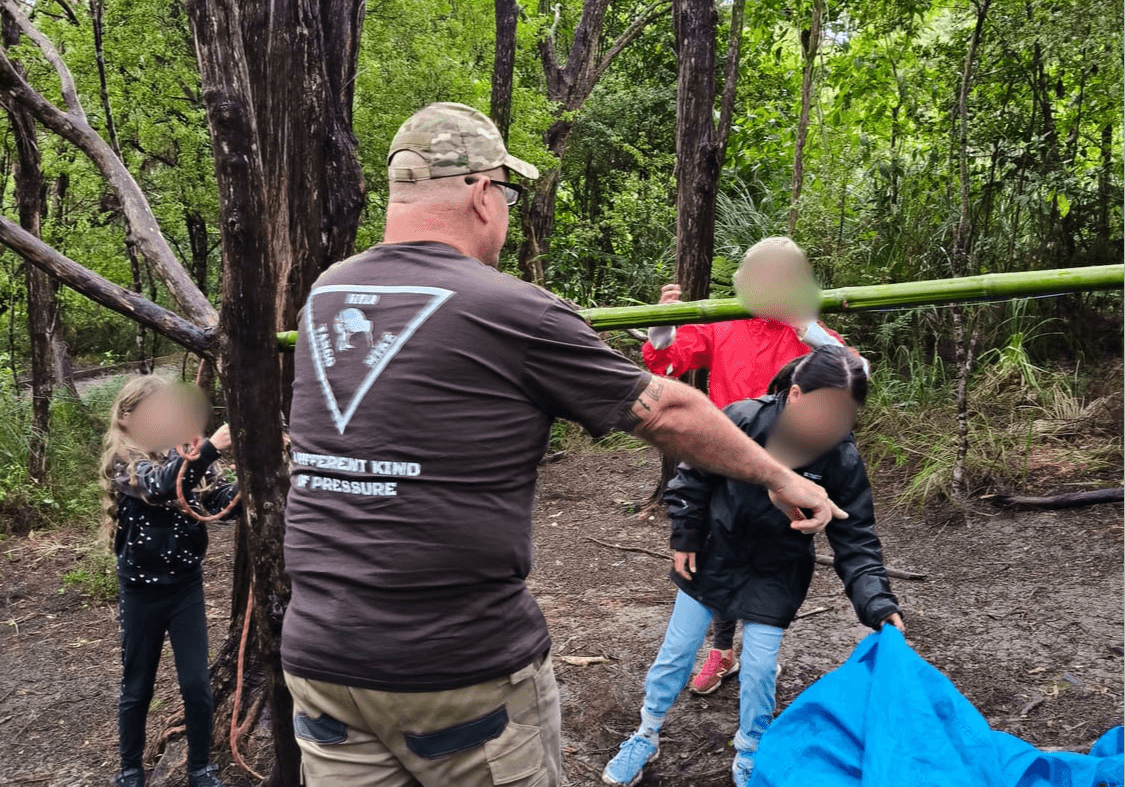
Mud, Bugs & Bivvies: Lessons in Leadership from the Forest Floor
By Chris Collins on September 16, 2025

Over-responsibility: The Silent Burden on Leaders and How to Address It
By Chris Collins on September 2, 2025
Our blog
The Tango Kilo Mike blog is a space for reflection, storytelling, and shared wisdom. We spotlight the voices of current and former members of the emergency and military services, along with their families, offering insights into leadership, resilience, mental health, and personal growth.
Whether it's a story of trauma turned into triumph, lessons learned on the front lines, or practical advice for navigating life after service, our blog is here to connect, uplift, and empower. Every post is written with mana—because every experience matters.
Explore popular posts, discover life lessons, and join a community built on courage, compassion, and connection.
Topics
Help Tango Kilo Mike
Achieve their mission
Tango Kilo Mike Charitable Trust is a registered NZ Registered Charity: CC59166